Showing posts with label rajasthan. Show all posts

Karni Mata Mandir - Deshnok

Karni Mata (2 October 1387 – 23 March 1538) was a femaleHindu sage born in the Charan caste and is worshiped as the incarnation of the goddess Durga by her followers. She is an official deity of the royal family of Jodhpurand Bikaner. During her lifetime, she laid the foundation stone of two of the important forts in Rajputana. She lived an ascetic life, and most of the temples dedicated to her were dedicated during her lifetime. A temple dedicated to her during her lifetime differs from others in that it does not contain an image or idol of her but rather contains a foot-print to symbolize her visit to that place. The most famous of her temples is the temple of Deshnoke, which was created following her mysterious disappearance from her home. The temple is famous for its rats, which are treated as sacred and given protection in the temple. This temple is near to Bikaner and Nokha. The second name of Karni mata is (Nari bai). Contrary to some reports, the temple is of the Hindu sect and is not affiliated with the Jainism.


Karni Mata Temple, Deshnok

The Karni Mata temple at Deshnoke, 30 km from Bikaner, in its present form was completed in the early 20th century in the late Mughal style by Maharaja Ganga Singhof Bikaner. The temple was further enhanced by Kundanlal Verma of Hyderabad-based Karni Jewelers in 1999. The huge silver gates to the temple and the marble carvings were also donated by him.
Throughout the year, pilgrims from around India visit to pay religious tribute to Karni Mata at the Deshnoke temple. Outside Rajasthan, she is respected and loved in areas such as Gujarat, Madhya Pradesh, and Haryana. During Navratri thousands of people travel to the temple by foot. If one of the rats is killed, it must be replaced with one made of solid gold. Sighting a white rat amidst hordes of black rats is considered specially auspicious.


The legend


According to a local legend, Karni Mata, the 14th century mystic and an incarnation of Hindu goddess Durga, implored Yama, the god of death, to restore the life of the son of one of her storyteller. Yama refused, and Karni Mata incarnated the dead son and all of the storytellers as a rat, under her protection. 
Karni Mata was born on 2 October 1387 in the village of Suwap in theJodhpur district of Rajasthan. The seventh daughter of Mehoji Charan and his wife Deval Devi, her original name was Ridhubai. According to legend, she earned the honorific name Karni at age six by miraculously curing her aunt. Mata—a term meaning "mother"— was commonly added to the names of those worshipped as mother goddesses. She married Dipoji Charan of the village of Sathika around AD 1415 but did not live a conventional "married life."
Later on she arranged the marriage of her husband with her younger sister Gulab. She lived in her in-laws' village for about two years before leaving with her followers and a herd of cattle to live a nomadic life, camping at sunset. One such a camp was made at village Jangloo, but a servant of Rao Kanha who was ruler of the place denied them access to water for people and cows. On this, Karni Mata declared her follower Rao Ridmal of Chandasar as new ruler of the village and continued on her journey. When she reached near Deshnok, Rao Kanha himself came to oppose her camping but he died. Karni mata stopped further wandering and started living there. Her husband Depoji died in AD 1454. Rats became sacred in her temple when Karni Mata's stepson Laxman drowned in a tank he was attempting to drink from.
Legend has it that Karni mata implored Yama, the god of Death; though he at first refused, Yama eventually relented, permitting Laxman and all of Karni mata's male children to be reincarnated as rats. In AD 1453, she gave her blessing to Rao Jodha of Jodhpur in conqueringAjmer, Merta and Mandor. In 1457, she went to Jodhpur at Rao Jodha's request to lay the cornerstone of the fort at Jodhpur.
Her first temple was constructed in the village of Mathaniya during her lifetime by her follower Amara Charan. In AD 1472, she arranged the marriage of Rao Bika (the fifth son of Rao Jodha) and Rang Kunwar (daughter of Rao Shekha of Pungal) to turn the enmity of the Rathor and Bhatian families into friendship. In 1485, she laid the foundation stone of the fort of Bikaner at the request of Rao Bika. In 1538, Karniji went to visit Maharaja of Jaisalmer. She was travelling back to Deshnok with her stepson Poonjar and few other followers on 21 March AD 1538. They were near Gadiyala and Girirajsar of Kolayat district in Bikaner district where she asked the caravan to stop for water. She disappeared there reportedly at the age of 151 years.

White Rat

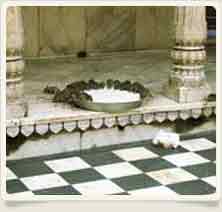
Out of all of the thousands of rats in the temple, there are said to be four or five white rats, which are considered to be especially holy. They are believed be the manifestations of Karni Mata herself and her kin. Sighting them is a special charm, and visitors put in extensive efforts to bring them forth, offering prasad, a sweet holy food.


Jodhpur - The Sun City (Surya Nagari Jodhpur)


Jodhpur  (RajasthaniजोधाणाHindiजोधपुर), is the second largest city in the Indian state of Rajasthan. It is located 335 kilometres (208 mi) west from the state capital, Jaipur and 200 kilometres (124 mi) from the city of Ajmer. It was formerly the seat of a princely state of the same name, the capital of the kingdom known as Marwar. Jodhpur is a popular tourist destination, featuring many palacesforts and temples, set in the stark landscape of the Thar desert.
The city is known the Sun City for the bright, sunny weather it enjoys all year. It is also referred to as the Blue City due to the blue-painted houses around the Mehrangarh Fort. Jodhpur lies near the geographic centre of Rajasthan state, which makes it a convenient base for travel in a region much frequented by tourists. The old city of Jodhpur is surrounded by a thick stone wall.

History :-
According to Rajasthan district Gazetteers of Jodhpur and Ramayana Abhiras were the original inhabitants of Jodhpur and later Aryans spread to this region.


Jodhpur was also part of the Gurjara - Pratihara empire and until 1100 CE was ruled by a powerfulBargujar King. Jodhpur was founded in 1459 by Rao Jodha, a Rajput chief of the Rathore clan. Jodha succeeded in conquering the surrounding territory and thus founded a state which came to be known as Marwar. As Jodha hailed from the nearby town of Mandore, that town initially served as the capital of this state; however, Jodhpur soon took over that role, even during the lifetime of Jodha. The city was located on the strategic road linking Delhi to Gujarat. This enabled it to profit from a flourishing trade in opiumcoppersilksandalsdate palms and coffee.
Early in its history, the state became a fief under the Mughal Empire, owing fealty to them while enjoying some internal autonomy. During this period, the state furnished the Mughals with several notable generals such as Maharaja Jaswant Singh. Jodhpur and its people benefited from this exposure to the wider world: new styles of art and architecture made their appearance and opportunities opened up for local tradesmen to make their mark across northern India.

Panorama Of Jodhpur :-


Aurangzeb briefly sequestrated the state (c.1679) on the pretext of a minority, but the rightful ruler Maharaja Ajit Singh was restored to the throne by Veer Durgadas Rathore after Aurangzeb died in 1707 and a great struggle of 30 years. The Mughal empire declined gradually after 1707, but the Jodhpur court was beset by intrigue; rather than benefiting from circumstances, Marwar descended into strife and invited the intervention of the Marathas, who soon supplanted the Mughals as overlords of the region. This did not make for stability or peace, however; 50 years of wars and treaties dissipated the wealth of the state, which sought and gratefully entered intosubsidiary alliance with the British in 1818.
During the British Raj, the state of Jodhpur had the largest land area of any in Rajputana. Jodhpur prospered under the peace and stability that were a hallmark of this era.The land area of the state was 23,543 sq mi (60,980 km2) its population in 1901 was 44,73,759. It enjoyed an estimated revenue of £35,29,000/. Its merchants, the Marwaris, flourished without let or limit and came to occupy a position of dominance in trade across India. In 1947, when India became independent, the state merged into the union of India and Jodhpur became the second city of Rajasthan.
Oswal Jains were mainly concentrated in Gorwar Region which was again ruled by Maharaja of Jodhpur . And Oswal jains also played main role in strengthening foundation of Jodhpur by donating mass wealth , gems to Maharaja of Jodhpur & in turn Maharaja of Jodhpur used to honour these wealthy Oswal Jain Merchants as Nagar Seth or various other honourable titles.
At the time of partition, ruler of Jodhpur Hanwant Singh did not want to join India, but finally due to the effective persuasion Maharana of Mewar and Sardar Vallab Patel the then Home Minister at centre princely state of Jodhpur was included in Indian Republic. Later after State Reorganization Act, 1956 it was made part of the state of Rajasthan.

Demography :-
As of 2011 India census, Jodhpur had a population of about 1.4 million. Men constitute 53 percent of the population and women 47 percent. Jodhpur has an average literacy rate of 87 percent, higher than the national average of 59.5 percent: male literacy is 85 percent, and female literacy is 59 percent. In Jodhpur, 14 percent of the population is under six years of age.

Economy :-


The Handicrafts industry has in recent years eclipsed all other industries in the city. By some estimates, the furniture export segment is a $200 million industry, directly or indirectly employing as many as 200,000 people. Other items manufactured include textiles, metal utensils, bicycles, ink and sporting goods. A flourishing cottage industry exists for the manufacture of such items as glass bangles, cutlery, carpets and marble products.
After handicrafts, tourism is the second largest industry of Jodhpur. Crops grown in the district include wheat and the famous Mathania red chillies. Gypsum and salt are mined. The city serves as an important marketplace for wool and agricultural products. The Indian Air ForceIndian Armyand Border Security Force maintain training centres at Jodhpur.

Forts And Palaces Of Jodhpur :-


Umaid Bhawan Palace :-

Umaid Bhawan Palace, located at Jodhpur in Rajasthan, India, is one of the world's largest private residences. A part of the palace is managed by Taj Hotels. Named after Maharaja Umaid Singh, grandfather of the present owners of the palace, this monument has 347 rooms and serves as the principal residence of the erstwhile Jodhpur royal family.
Umaid Bhawan Palace was called Chittar Palace during its construction due to its location on Chittar Hill, the highest point in Jodhpur. Ground for the foundations of the building was broken on 18 November 1929 by Maharaja Umaid Singh and the construction work was completed in 1943.
Built on the Chittar Hill in southeastern area of the Jodhpur, construction employed more than 5000 men for fifteen years. The building does not use mortar or cement to bind stones together; all of its pieces are carved stones joined together by a system of carved, interlocking positive and negative pieces. A specially constructed train line was used to transport these large blocks of stone. Umaid Bhavan is designed in such a manner that it always maintains the temperature at approximately 23 degrees Celsius.


Mehrangarh Fort :-

Mehrangarh Fort, located in Jodhpur city in Rajasthan state, is one of the largest forts in India.
The fort is situated 400 feet (122 m) above the city and is enclosed by imposing thick walls. Inside its boundaries there are several palaces known for their intricate carvings and expansive courtyards. A winding road leads to and from the city below. The imprints of cannonball hits by attacking armies of Jaipur can still be seen on the second gate. To the left of the fort is the chhatri of Kirat Singh Soda, a soldier who fell on the spot defending the Mehrangarh fort.
There are seven gates, which include Jayapol (meaning 'victory'), built by Maharaja Man Singh to commemorate his victories over Jaipur and Bikaner armies. Fattehpol (also meaning 'victory') gate was built by Maharaja Ajit Singh to mark the defeat of the Mughals. The palm imprints upon these still attract much attention even today.
The museum in the Mehrangarh fort is one of the most well-stocked museums in Rajasthan. In one section of the fort museum there is a selection of old royal palanquins, including the elaborate domed gilt Mahadol palanquin, which was won in a battle from the Governor of Gujarat in 1730. The museum exhibits the heritage of the Rathores in arms, costumes, paintings and decorated period rooms.
Rao Jodha (1438–1488), one of Ranmal's 24 sons became the fifteenth Rathore ruler. One year after his accession to the throne, Jodha decided to move his capital to the safer location of Jodhpur as the one thousand years old Mandore fort was no longer considered to provide sufficient security.


Jaswant Thada Jodhpur :-

The Jaswant Thada is an architectural landmark located in Jodhpur. It is a white marble memorial built by Sardar Singh in 1899 in memory of Maharja Jaswant Singh II.
The monument, in its entirety, is built out of intricately carved sheets of marble. These stones are extremely thin and polished so that they emit a warm glow when the sun's rays dance across their surface.Within this cenotaph, there are also two more tombs. The Jaswant Thada is a traditional cremation ground of Jodhpur rulers. The grounds also include exquisitely carved gazebos, a beautiful multi-tiered garden, and a small lake.


Excursions :-

  1. Mandore
  2. Kaylana Lake and Garden
  3. Balsamand lake
  4. Sardar Samand lake and palace
  5. Masooria Hill, Veer Durgadas Smarak, park, museum
  6. Dhawa (Dholi) forest area
  7. Khichan
  8. Osian
  9. Nakoda ji

Fairs And Festivals :-


  1. Marwar festival
  2. Gangaur
  3. Teej
  4. Nag Panchmi fair
  5. Mahavir Jayanti
  6. Shietla Mata
Folk Dance Jodhpur

File:Folkjodh.jpg


Cuisine :-

A number of Indian delicacies have originated in Jodhpur. To name a few, the Makhaniya Lassi, Mawa Kachori, Pyaaj Kachori, Hot & Spicy Mirchibada (chaudhary ka mirchi bada)(A preparation made with potato, onion, chilli and gramflour), Dal Bati ChurmaPanchkuta, Lapsi (a special kind of dessert made with wheat, Jaggery, and ghee), Kachar mircha curry (made with chilli and kachar, a special type of vegetable grown in desert area) and Kadhi (made with gramflour, curd and chilli) with Baajre ka sogra. Jodhpur is known for its sweets ranging from traditional "Makhanbada" to Bengali "Roshogollas".,"Ras madhuri". Jodhpur Sweets''' at Sardarpura and Ratanada is providing a high quality of sweets & namkeens.

Education :-


Jodhpur is fast becoming a major education hub for higher studies in India. Major Institutions areIndian Institute of Technology Rajasthan (A premier technical institute of India), NLU (National Law University, Jodhpur),Jodhpur National University (Jodhpur National University), National Institute of Fashion Technology, Ayurveda University (Second University of its kind in India), JNVU (Jai Narayan Vyas University) (NAAC accredited "A" Grade University).MBM Engineering College, which falls under JNVU university, is the world's only institute which has its own mines. Also a new campus of All India Institute of Medical Sciences is going to be established in CAZRI(Central Arid Zone Research Institute)campus. The other educational institutions include Dr. S.N Medical College, JECRC, JIET, ICMT, Lachoo Memorial College, Somani College, Marwar Engineering College,VIET etc. It is also India's largest hub for preparation of CA entrance.

IIT JODHPUR


Transportation :-


The city is very well connected with Road, Rail and Air. It is mostly connected with railways to major Indian cities like DelhiMumbai,KolkataChennaiBangalorePuneKotaKanpurBareillyHyderabadAhmedabadIndoreBhopalJabalpurGuwahatiNagpurLucknowand Jaipur.The railway station is also the originating point for various trains like Jodhpur - Indore Express, Jodhpur - Bhopal Express, Jodhpur - Puri Express , Mandore Express, Suryanagri Superfast Express etc.
Jodhpur Airport is one of the prominent airports of western india. It was primarily constructed as an Air Force base because of its important strategic location ( Jodhpur Airport played the crucial role during Indo-Pak wars in 1965, 1971).


Barefoot: A Novel21                             

Jaisalmer - The Golden City

Hi friends,

After continuous post on Kripa Ram Ji, now its time for some change.

Today I want to talk with you about a famous city, named Jaisalmer with some beautiful pictures of city and also the famous and attractive destinations of the city.So Lets start......

Jaisalmer :-


Jaysalmer nicknamed "The Golden City", is a town in the Indian state of Rajasthan. It is located 575 kilometres (357 mi) west from the state capital Jaipur. It was once known as Jaisalmer state. The town stands on a ridge of yellowish sandstone, crowned by a fort, which contains the palace and several ornate Jain temples. Many of the houses and temples are finely sculptured. It lies in the heart of the Thar Desert and has a population of about 78,000.


Jaisalmer is named after its founder Rao Jaisal Yadav king. "Jaisalmer" means "the Hill Fort of Jaisal". Jaisalmer is sometimes called the "Golden City of India" because the yellow sand gives a yellowish-golden tinge to the city and its surrounding area.


History of Jaisalmer :-


The majority of the inhabitants of Jaisalmer are Bhatti Rajputs, named for Bhatti, who was renowned as a warrior. This area was part of Gurjar - Pratihara empire and until the 11th century was ruled by a powerful Bargujar King. Deoraj, a famous prince of the Bhati family, is esteemed the real founder of the Jaisalmer dynasty, and with him the title of rawal commenced. In 1156 Rawal Jaisal, the sixth in succession from Deoraj, founded the fort and city of Jaisalmer, and made it his capital as he moved from his former capital at Lodhruva(which is situated about 15 km to the north-west of Jaisalmer). In 1293, the Bhattis so enraged the emperor Ala-ud-din Khilji that his army captured and sacked the fort and city of Jaisalmer, so that for some time it was quite deserted. Some Bhatti's migrated to Talwandi, now Nankana Sahib in Distt. Nankana Sahib (Punjab, Pakistan) and others settled in Larkana (in Sind, Pakistan)under the name of Bhutto. In Nankana Sahib, the Bhatti Clan can be traced from the lineage of Rai Bhoe and Rai Bular Bhatti. After this there is nothing to record until the time of Rawal Sahal Singh, whose reign marks an epoch in Bhatti history in that he acknowledged the supremacy of the Mughal emperor Shah Jahan. The Jaisalmer princes had now arrived at the height of their power, but from this time till the accession of Rawal Mulraj in 1762 the fortunes of the state rapidly declined, and most of its outlying provinces were lost. In 1818 Mulraj entered into political relations with the British. Maharawal Salivahan, born in 1887, succeeded to the chiefship in 1891.
The Maharajas of Jaisalmer trace their lineage back to Jaitsimha, a ruler of the Bhatti Rajput clan. The major opponents of the Bhati Rajputs were the powerful Rathor clans of Jodhpur and Bikaner. They used to fight battles for the possession of fortswaterholes or cattle. Jaisalmer was positioned strategically and was a halting point along a traditional trade route traversed by the camel caravans of Indian and Asian merchants. The route linked India to Central Asia, EgyptArabiaPersiaAfrica and the West.

Transport :-
Jaisalmer is the terminus of a Broad gauge branch railway of Indian Railways, which joins with the main system at Jodhpur. The Palace on Wheels has a scheduled stop at Jaisalmer.

Visitors Attractions :-

Jaisalmer Fort Built in 1156 by the Bhati Rajput ruler Jaisal, Jaisalmer Fort is situated on Trikuta Hill and had been the scene of many battles. Its massive sandstone walls are a tawny lion colour during the day, turning to a magical honey-gold as the sun sets. The famous Indian film director Satyajit Raywrote a detective novel and later turned it into a film – Sonar Kella (The Golden Fortress) which was based on this fort. This is a living fort and about a quarter of city's population still live inside the fort. The main attractions inside the fort are: Raj Mahal (Royal palace), Jain temples and the Laxminath temple.

Jaisalmer Fort 


Havelis - The main havelis in Jaisalmer are:

  • Patwon-ki-Haveli: Guman Chand Patwa (and later by his five sons), a wealthy merchant belonging to powerful Oswal Jain community and banker who had over three hundred trading centres from Afghanistan to China. This ornate five-storey complex took fifty years to complete. This is the largest, the most magnificent, and the most elaborate of Jaisalmer havelis.
  • Salam Singh-ki-Haveli: It was built by the scheming Prime Minister Salam Singh in 1815. It has a beautifully arched roof capped with blue cupolas and carved brackets in the form ofpeacocks.
  • Nathmalji-ki-Haveli: Built by a Prime Minister of princely state of Jaisalmer. Its facade is a riot of ornamentation: flowers, birds, elephants, soldiers, a bicycle and even a steam engine.
  • Haveli Shreenath :haveli The Vyas family built this lovely haveli Shreenath Palace - Hotel in Jaisalmer in the 15 th Century, and descendants of this family live here today. Shreenath Palace - Hotel in Jaisalmer was once inhabited by the Prime Minister of Jaisalmer, and guest are invited to stay in these rooms – there are only five available for the hotel – and join the Vyas family in enjoying this architectural treasure, and feel like aMaharaja for a few days. Some of the doors and ceilings are wonderful examples of old carved wood from many hundreds of years ago. Some of the doors have brass or iron fittings.


Patwon ki Haveli


Salam Singh ki Haveli


Havelis


Gadsisar Lake - 

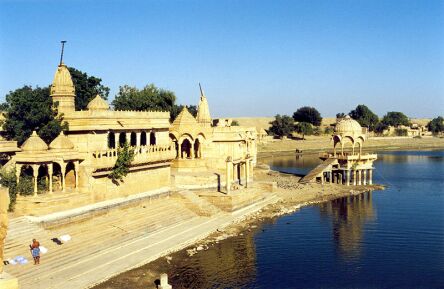
Gadsisar Lake Excavated in 1367 by Rawal Gadsi Singh, it is a scenic rainwater lake surrounded by small temples and shrines.

Gadsisar Lake


Jain Temples of Jaisalmer - 

Jaisalmer city has been enriched by its Jain community which has adorned the city with beautiful Jain temples most notably the temples dedicated to 16th Tirthankar Lord Shantinath and 23rd Tirthankar Lord Parshvanath. Jaisalmer boasts some of the oldest libraries of India which contain rarest of the manuscripts & artefacts of Jain tradition. There are many Jain pilgrimage centres around Jaisalmer like Lodarva, Amarsagar, Brahmsar and Pokharan.

Jain Temple


Some Beautiful Desert Pictures -

Desert pictures


Its Time to say bye for now. I will meet you soon with something new.

Rest for the Next.

Till then bye bye....have a nice weekend...take care and keep smiling....